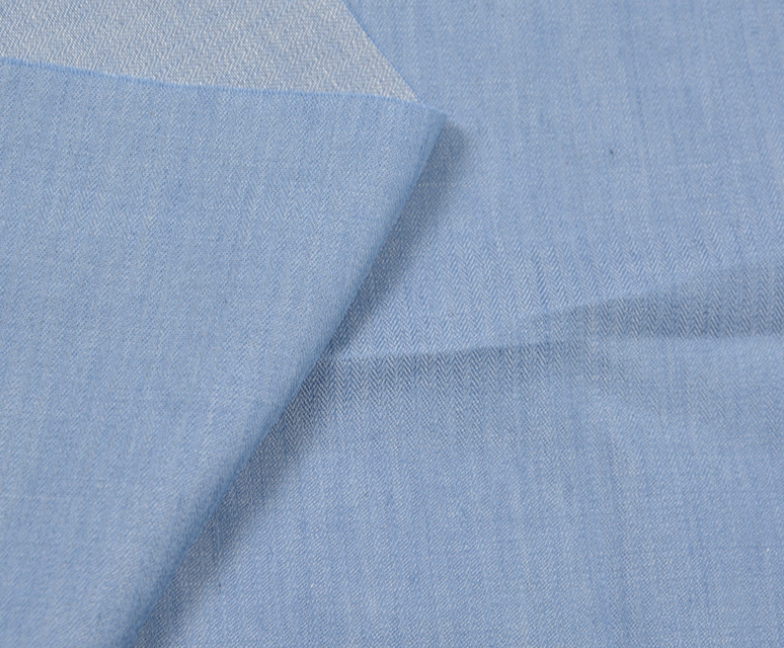
Chambray and denim are both durable cotton fabrics with a similar appearance, but they differ in their weave structure, weight, and typical uses. Here’s a breakdown of their key differences:
1. Weave Structure
- Denim:
6oz dark blue denim 3×1 twill

-
- Uses a twill weave (usually a 3×1 or 2×1 pattern), where the weft thread passes under multiple warp threads, creating a diagonal ribbing pattern.
- Traditionally, denim has a colored warp (usually indigo) and a white weft, giving it a distinctive blue front and white back.
- Chambray:
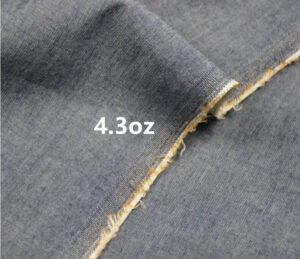
4.3oz dark blue chambray fabric
-
- Uses a plain weave (same as a basic dress shirt), where the warp and weft threads alternate evenly (1×1).
- Typically has a colored warp (often light blue) and a white weft, resulting in a more uniform, softer appearance than denim.
2. Weight & Texture
- Denim:
- Heavier and stiffer (usually 10 oz/yd² or more), making it ideal for jeans and jackets.
- The twill weave gives it a rugged, textured feel.
- Chambray:
- Lighter and softer (often 4–7 oz/yd²), resembling a dress shirt fabric.
- The plain weave makes it smoother and more breathable.
3. Appearance
- Denim:
- Uneven color due to the twill weave (darker on one side, lighter on the reverse).
- Fades distinctively over time.
- Chambray:
- More consistent color with a slight mottled effect (due to the white weft showing through).
- Resembles a lightweight, casual version of denim.
4. Common Uses
- Denim: Jeans, jackets, overalls, and workwear.
- Chambray: Shirts, dresses, lightweight summer apparel, and casual wear.
Denim vs. Chambray: Key Differences
| Feature | Denim | Chambray |
|---|---|---|
| Weave | Twill (diagonal ribbing) | Plain (simple crisscross) |
| Weight | Heavy (10+ oz/yd²) | Light to medium (4–7 oz/yd²) |
| Texture | Rough, stiff | Soft, smooth |
| Color | Darker on one side (indigo warp, white weft) | Even, slightly mottled (colored warp + white weft) |
| Fading | High-contrast fades over time | Subtle, minimal fading |
| Durability | Very strong, rigid | Less rugged, more breathable |
| Typical Uses | Jeans, jackets, workwear | Shirts, dresses, lightweight apparel |
When to Choose Each Fabric:
✔ Pick Denim If: You want durability (jeans, jackets) or a rugged, structured look.
✔ Pick Chambray If: You prefer a softer, breezy feel (summer shirts, casual dresses).
Key Takeaway:
Denim is heavier, more durable, and has a diagonal twill pattern, while chambray is lighter, softer, and uses a plain weave for a smoother finish. Both are great for casual styles but serve different purposes.
Both fabrics are versatile, but denim is heavier and more hard-wearing, while chambray is lighter and more relaxed. Would you like styling tips for either?