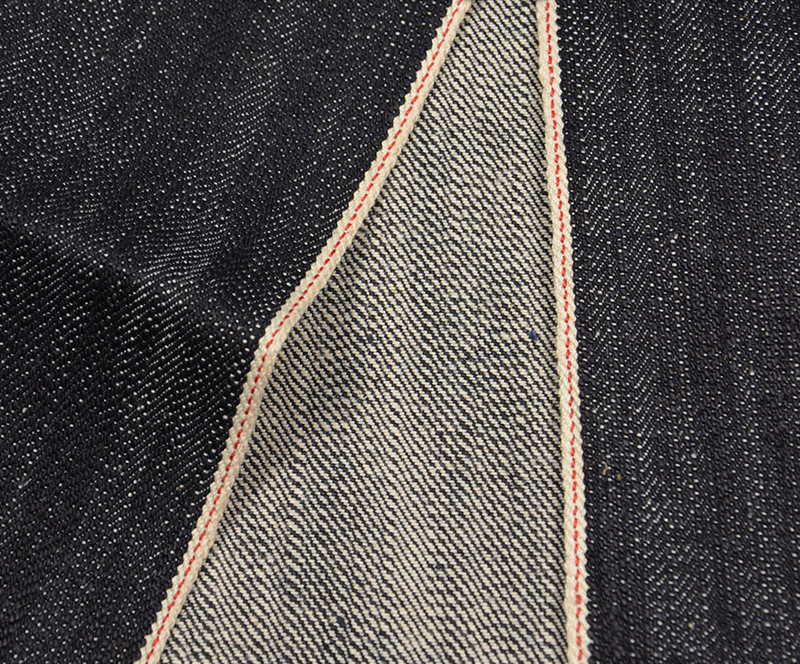
All denim is made up of warp (vertical) and weft (horizontal) yarns. The warp yarns are usually dyed with indigo and make up the majority of the visible surface of the denim. Therefore, slub denim usually refers to denim with indigo-dyed warp yarns of varying thickness.
The slub effect in denim refers to the intentional irregularity in the yarns used to weave the fabric, creating a textured, slightly bumpy, or uneven surface. This effect is achieved by varying the thickness of the yarn during spinning, resulting in subtle lumps (slubs) that give the denim a unique, organic character.
How the Slub Effect Works in Denim:
- Yarn Spinning:
- Traditional denim uses smooth, uniformly spun yarns.
- Slub denim yarns are spun with deliberate thick-and-thin variations, creating a “slubbed” texture.
- Weaving Process:
- The irregular yarns are woven into denim, producing a fabric with a tactile, slightly rough feel.
- The slubs scatter light differently, adding visual depth (e.g., subtle streaks or flecks).
- Final Appearance:
- Texture: Soft nubs or ridges that become more pronounced with wear.
- Color Variation: Slubs can create tonal differences in indigo or black dyes (e.g., lighter/darker spots).
Why the Slub Effect Matters in Denim:
- Aesthetic Appeal: Mimics the imperfections of vintage or hand-loomed denim.
- Unique Fading: Slubs wear unevenly, leading to distinctive fade patterns over time.
- Breathability: The slightly looser weave (common in slub denim) enhances airflow.
Slub vs. Regular Denim:
| Feature | Slub Denim | Regular Denim |
|---|---|---|
| Yarn | Irregular, lumpy | Smooth, even |
| Texture | Nubby, tactile | Flat, uniform |
| Fading | Organic, unpredictable | Consistent, even |
| Feel | Softer with wear | Stiffer initially |
Best For: Jeans, jackets, or shirts with a rustic, artisanal look. Popular in raw selvedge denim and Japanese brands (e.g., Momotaro, Oni Denim).
Want to see examples of slub denim fade evolution? Let me know!